
ByJohn A
Choosing an Outdoor Sauna the Whole Household Will Use
Picking a sauna the whole family will actually use comes down to three decisions made in order: how many people need to fit at once, how hot each person wants it, and how the unit fits the yard without becoming a hike from the back door. A six-person cabin with tiered benches and a mid-range electric heater, typically $5,500 to $9,000 installed, covers most households of three to five people comfortably. Skipping any one of these three steps is the most common reason a sauna gets used twice and then sits empty.
Step one: count real simultaneous use, not household size
A family of five rarely all shows up to the sauna at once. Look at how many people realistically want a session on the same evening, usually two or three, and size the cabin for that number plus a bit of room, not for every person who lives in the house. A four-person cabin, about 5 by 6 feet inside, comfortably seats two adults and two kids or three adults with some spacing. Buying larger than that mostly adds cost and heat-up time without adding real use, since a bigger air volume takes longer to reach temperature and costs more to run.
Step two: decide on heat style before you shop
Traditional saunas run hot, 170 to 195 degrees Fahrenheit, with humidity added by pouring water over hot rocks (loyly, in Finnish tradition). Infrared cabins stay cooler, 120 to 140 degrees, and warm the body through radiant panels rather than heating the air. If household members disagree on how much heat they can tolerate, a cabin with a lower thermostat ceiling, or an infrared unit, tends to keep everyone using it rather than one person cranking the heat and everyone else avoiding the sessions. Some cabin models support both electric traditional and add-on infrared panels, which costs more upfront but sidesteps the disagreement entirely.
Step three: place it where people will actually walk to it
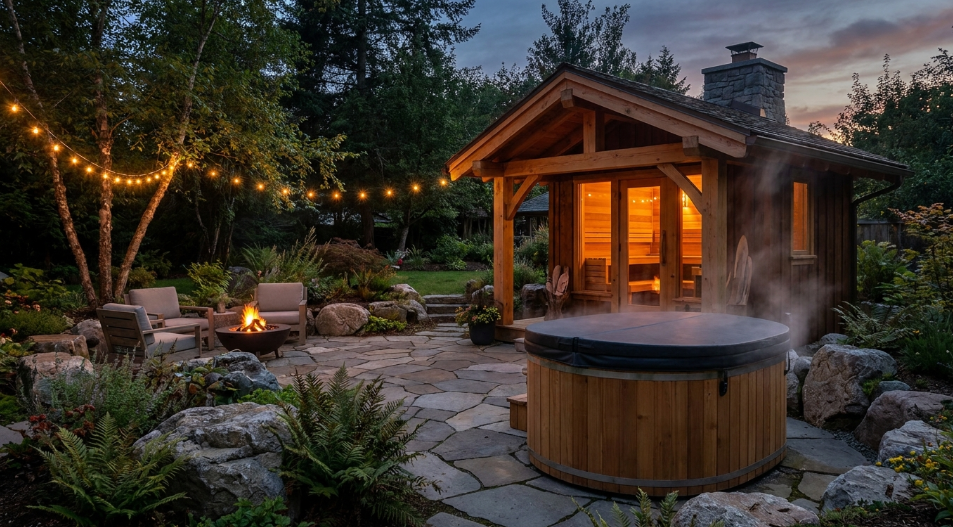
A sauna sited far from the house, across wet grass, up a hill, or past a gate that needs to be unlatched, gets used far less often than one within a short, dry, well-lit path of the back door. Aim for a spot no more than 30 to 50 feet from an entrance, ideally with a lit path and a level, dry surface the whole way, not just under the unit itself. Households that place the sauna near an existing patio or deck report using it more consistently through the year than those who tuck it into a far corner of the yard for privacy, because convenience beats seclusion for regular use.
Bench layout and window placement matter more than people expect
Tiered benches let each person self-select their heat exposure, since temperature stratifies inside a sauna, hotter near the ceiling, cooler near the floor, often by 15 to 20 degrees between levels. A household with a wide range of heat tolerance benefits from a two-tier layout more than a single-level bench. A window, even a small one, also makes a real difference in how often kids and heat-sensitive adults use the space, since being able to see out reduces the closed-in feeling that keeps some people from going past five minutes.
What the evidence says about consistent household use
A systematic review of dry sauna bathing published in Evidence-Based Complementary and Alternative Medicine found the reported benefits, better sleep, lower perceived stress, improvements in some cardiovascular markers, cluster around regular users rather than occasional ones. An older but still widely cited review in The American Journal of Medicine reached a similar conclusion: benefits track with frequency, and the studies showing the clearest associations came from populations that used a sauna multiple times a week over years, not months. That is a strong argument for designing the setup so more household members will actually use it, rather than optimizing for the person who wants it hottest. As with any heat exposure, people with cardiovascular conditions, who are pregnant, or who have been drinking should be cautious or sit out.
Comparing real options before you commit
Once you know the size and heat style that fits your household, it helps to check what is in stock at a specialty retailer so you can compare actual listed bench dimensions and thermostat ranges instead of guessing from marketing photos. Cabin interiors vary by several inches between brands even at the same stated capacity, and that difference shows up fast once three people are actually sitting inside.
Making room for one household member who wants it hotter
Even with a shared cabin and a thermostat everyone agrees on, there is often one person who wants a longer, hotter session than the rest of the household. Rather than turning the whole cabin up for that one preference, some families schedule a solo slot, early morning or after everyone else is done, so that person can run a longer session at a higher temperature without changing the experience for kids or heat-sensitive adults during shared time. This small scheduling fix resolves more household sauna disagreements than any equipment purchase does, since the underlying conflict is usually about timing and temperature preference, not the sauna itself.
Setting household rules before the first session
A quick family agreement on session length, usually 15 to 20 minutes, a water bottle rule, and a lower temperature cap when kids are inside prevents most of the friction that causes a shared sauna to fall out of rotation. Establishing this early, before the first argument over the thermostat, keeps the sauna a shared habit instead of one person’s solo hobby that everyone else stopped joining after the first few weeks.
Frequently Asked Questions
What size sauna fits a family of four?
A six-person cabin, roughly 6 by 8 feet inside, gives a family enough bench space to sit without crowding. Four-person cabins work if members rarely use it at the same time.
Can kids use a home sauna?
Most guidance suggests shorter sessions and lower temperatures for children, with adult supervision throughout. Many families set a lower thermostat cap and a strict time limit when kids are inside.
Should each person have their own bench level?
Tiered benches let people choose their heat exposure, since air temperature runs hotter near the ceiling and cooler near the floor. A two-tier layout is common in cabins built for three or more people.
How do you settle on a heat source everyone agrees on?
Run a short trial if possible, a spa day pass or a friend’s sauna, to see whether the household prefers high traditional heat or the gentler warmth of infrared before committing to one system.
References
- Clinical Effects of Regular Dry Sauna Bathing: A Systematic Review, Evidence-Based Complementary and Alternative Medicine, 2018
- Benefits and risks of sauna bathing, The American Journal of Medicine, 2001
- Does the Combination of Finnish Sauna Bathing and Other Lifestyle Factors Confer Additional Health Benefits? A Review of the Evidence, Mayo Clinic Proceedings, 2023
